
Hannah Berger

Lorem ipsum dolor sit amet, consectetur adipiscing elit. Suspendisse varius enim in eros elementum tristique. Duis cursus, mi quis viverra ornare, eros dolor interdum nulla, ut commodo diam libero vitae erat. Aenean faucibus nibh et justo cursus id rutrum lorem imperdiet. Nunc ut sem vitae risus tristique posuere.
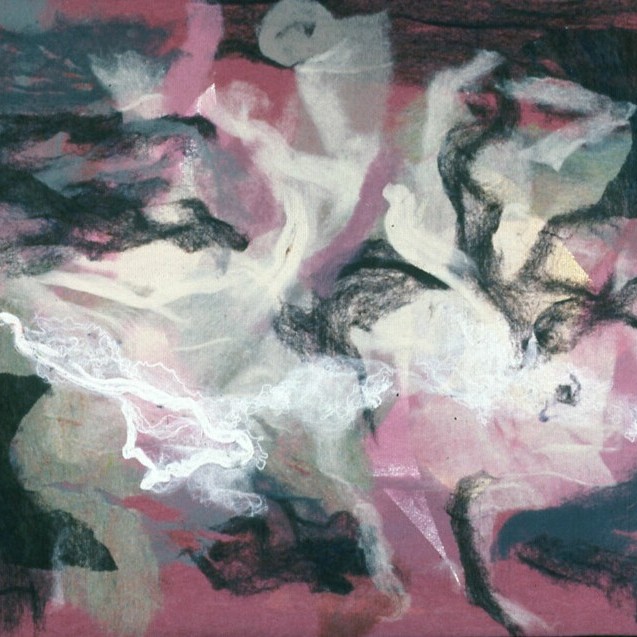
Read our interview with Hannah Berger, winner of the 2025 Montreal Fiction Prize, in which she discusses the experience of winning the prize, the relationship between her visual art and writing, and the significance of leaving space for readers to make connections.
Lorem ipsum dolor sit amet, consectetur adipiscing elit. Suspendisse varius enim in eros elementum tristique. Duis cursus, mi quis viverra ornare, eros dolor interdum nulla, ut commodo diam libero vitae erat. Aenean faucibus nibh et justo cursus id rutrum lorem imperdiet. Nunc ut sem vitae risus tristique posuere.
Hannah Berger's short story "A Swelling" was awarded the 2025 Montreal Fiction Prize, as judged by Billy Ray-Belcourt. Yolk caught up with Hannah in anticipation of the 2026 Montreal Fiction Prize, which is judged by Heather O'Neill and open for submissions until June 30th. Full submission details can be found on our website.
You can read "A Swelling" on our Digital Publication.
“Life is hell, but at least there are prizes. Or so one thought…”* When you’re an artist who is trying to make rent from art, you have to spend a heroic amount of time filling out Google forms. You have to get rejected a lot. It’s the greatest privilege of my life to get to write and make art, but it can also feel lonely and punishing because of how the world is. I’d like to think I could survive at the bottom of the ocean for a thousand years, like whatever is probably living down there. But awards like these are great encouragement: more eyes on my work and the message that the things I’m making are resonating. After winning the prize, my story was nominated for a National Magazine Award and selected for the 2027 Best Canadian Stories anthology. None of that would have happened without this."
"It was an honour that felt completely unlikely, unimaginable, which I still can’t really wrap my head around. The fact that this brilliant poet whose work I’ve respected for so long would take the time to read my work, to think about it and have this response which affirms what I was trying to do. It still totally bowls me over"
"I started writing at a time when my full-time job and night school prevented me from being able to go work on visual art at my studio. At first, the two felt very distinct, only similar because they satisfied the same impulse. But then I’ll read one of my stories from that time, and find that I’ve always had the same priorities in everything I do. If I compare making a drawing to writing a story, I can say that each requires an extreme economy of space, of lines. I always want to leave gaps, and to have the thing feel very new and very old at once, if I’m lucky."
"Sure, who knows when to stop editing? That line was also about how memory works, these cycles of revision that get you through time. My best friend Hannah always says that it’s so easy to write a letter, but so impossible to send it."
"As a reader, I hate when a story has too much exposition. To my mind it should be treated like blending vegetables into a picky child’s dinner. Whenever I read other people’s mail (in an antique store or archive, not at "Canada Post") I’m drawn in by the way people talk around events which both correspondents are aware of, and so don’t need to be described in the same detail as they would be in literature. People are smart, and can put things together themselves. The story also expresses the thrill of reading other people’s mail, so I thought the frame of it should allow the reader to share in that joy"
"The landscape of Southwestern Ontario, which really does look like a stamped-in cardboard box, is the landscape of my dreams. It’s lumpy and drab but with birds and wetlands, and tall, austere churches. I’ve always had an interest in finding old local letters or photographs and filling in certain gaps, making new ones elsewhere. It’s the same with the old yellow brick houses off backroads which all have barns that look bombed out. "A Swelling" didn’t begin with any one photograph or letter, but with those great houses and barns by the highway. And I was listening to the song “I Was a Stranger” by Smog a lot."
"I’m beginning to experiment with more hybrid work, stories with drawings and photographs in them and the like. I’m also just looking forward to collaborating on projects this summer. All my best work has come from collaborating with people I care about. Mostly, though, I want to do more readings, in and out of Montreal. So if anyone has read this far and is planning that sort of thing, please write me a note!"
*Opening words from the best short story ever written, Prizes by Janet Frame.





Yolk acknowledges that our work in Tiohtià:ke/Montréal takes place on the unceded Indigenous lands of the Kanien’kehá:ka/Mohawk Nation. Tiohtià:ke is known as a gathering place for many First Nations, and we recognize the Kanien’kehá:ka as custodians of the lands on which we gather.
Yolk warmly acknowledges the financial support of the Canada Council for the Arts, Conseil des arts de Montréal, and the English Language Arts Network’s Trellis Micro-grant project, funded by The Department of Canadian Heritage’s Official Languages Support Programs.


1.jpg)
2.jpg)